

If your dog is stiff after walks or your cat no longer jumps to favorite perches, acupuncture can be a safe, minimally invasive way to reduce pain, improve mobility, and support overall well‑being—alongside your veterinarian’s primary care.
What is veterinary acupuncture?
Veterinary acupuncture medical technique performed by trained veterinarians that stimulates specific points (acupoints) to influence nerves, muscles, and circulation. Approaches include dry needling, electroacupuncture (mild electrical stimulation), aquapuncture (injecting small volumes of fluids like vitamin B12 into points), and laser acupuncture (great for fearful or very sensitive pets).
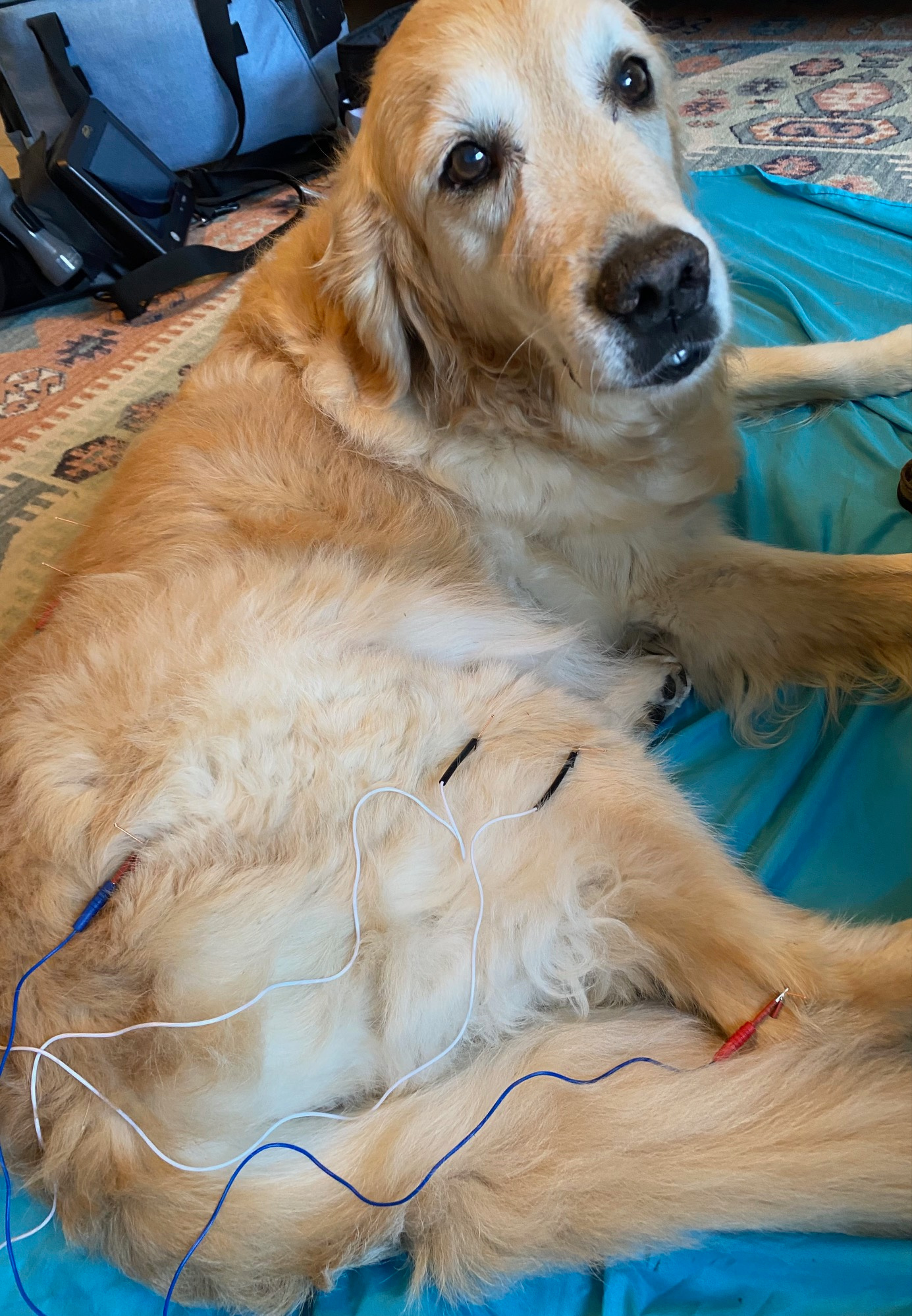
What is veterinary acupuncture?
Veterinary acupuncture medical technique performed by trained veterinarians that stimulates specific points (acupoints) to influence nerves, muscles, and circulation. Approaches include dry needling, electroacupuncture (mild electrical stimulation), aquapuncture (injecting small volumes of fluids like vitamin B12 into points), and laser acupuncture (great for fearful or very sensitive pets).
How can acupuncture help my pet?
Pain relief and reduced inflammation: Needle stimulation can trigger the body’s pain‑modulating pathways, release endorphins and serotonin and cause descending inhibition of pain.
Better joint function and mobility: Acupuncture can ease stiffness which then improves range of motion.
Faster recovery after injury or surgery: Acupuncture can help control pain, reduce swelling, and support tissue healing as part of a rehab plan.
Neurologic support: Adjunctive tool in intervertebral disc disease (IVDD) and some nerve injuries to aid comfort and function.
Calmer nervous system: Many pets relax during sessions; helpful for stress‑related tension and some anxiety presentations. Reduced reliance on medications: Sometimes allows lower doses of pain meds (never change meds without your vet’s guidance).
Note: Acupuncture is complementary medicine. It works best as part of a multimodal plan (pain meds, rehab, weight management, environment changes).
What conditions are commonly treated with acupuncture?
Dogs: Osteoarthritis, hip/elbow dysplasia pain, post‑op pain, back/neck pain (including IVDD under veterinary care), chronic neurologic disorders (such as degenerative myelopathy, GOLPP and other peripheral neuropathies), sports/working dog strain, tendon/ligament strain, lick granulomas.
Cats: Osteoarthritis, back/neck pain, tendon/ligament strain, post‑injury soreness, urinary stress syndromes (as supportive care), nausea/appetite issues.
What does an in-home acupuncture session look like?
During the initial visit, I will collect a thorough history, perform a physical exam, gait and pain assessment, and we will discuss your goals for your pet. I will typically choose a small area on the floor or on a pet bed to treat your pet. The goal is to allow them to feel little stress. We will start with a small number of needles and add depending on tolerance. Sessions can last for 10-30 minutes. Electroacupuncture or aqua-acupuncture may be added for certain cases.
How often should my pet be treated?
This typically will depend on your pet’s condition that is being treated. If your pet is very painful or suffering from a recent injury, I may suggest treating them more frequently to get ahead of the pain or encourage improvement of limb weakness. Once your pet is feeling better, we space out the treatments and discuss what would be useful for maintenance depending on response and condition.
What you might notice: After 1–3 sessions: Softer movement, easier rising, improved mood or sleep. After a series: Better stamina, fewer bad pain days, more willingness to play, jump, or take stairs. Some pets are “slow responders”—I will reassess and adjust the plan.
Does it hurt?
Most pets tolerate needles very well; many relax or nap. Laser acupuncture is an option for needle‑averse pets. Sometimes when a needle is placed near an area of discomfort, the pet may feel an initial “zing” or reaction. This typically subsides and the pet relaxes. If your pet is showing signs of stress or discomfort, needles will be removed. Your pet always has a choice about the treatment session!
What side effects could my pet experience?
Side effects are usually mild: brief soreness, transient fatigue, or rare bruising. Many pets nap afterward. Performed by a trained veterinarian, risks like infection are very rare. We use single‑use sterile needles that are safely discarded after each treatment.
When would acupuncture be contraindicated?
Acupuncture should be used with caution or avoided in: bleeding disorders, severe skin infection at needle sites, certain tumor areas, late pregnancy (specific points), uncontrolled seizures (regular needling is fine, but we avoid electroacupuncture), or any other unstable medical conditions. If your pet is experiencing any of these conditions, we will discuss benefits and risk and can also discuss alternative treatment options.
Red flags that need urgent vet care (not acupuncture alone): sudden paralysis, severe unrelenting pain, breathing difficulty, major trauma.
How strong is the evidence for acupuncture?
A growing body of veterinary research and clinical experience supports acupuncture for pain relief and improved function, especially in canine osteoarthritis and as part of multimodal pain management. Major veterinary pain guidelines (e.g., AAHA/AAFP) include acupuncture as a potential adjunct. As with many therapies, results vary by patient and condition.
How do I find a vet who qualified to perform acupuncture?
Look for veterinary‑specific credentials: CVA (Certified Veterinary Acupuncturist, Chi University/IVAS), or vets with formal acupuncture training through recognized programs. Ask about experience with your pet’s species and condition, handling style (Fear Free/cat‑friendly), and how acupuncture integrates with your pet’s overall plan. Expect clear goals, a defined trial period (e.g., 3–4 sessions), and home care advice.